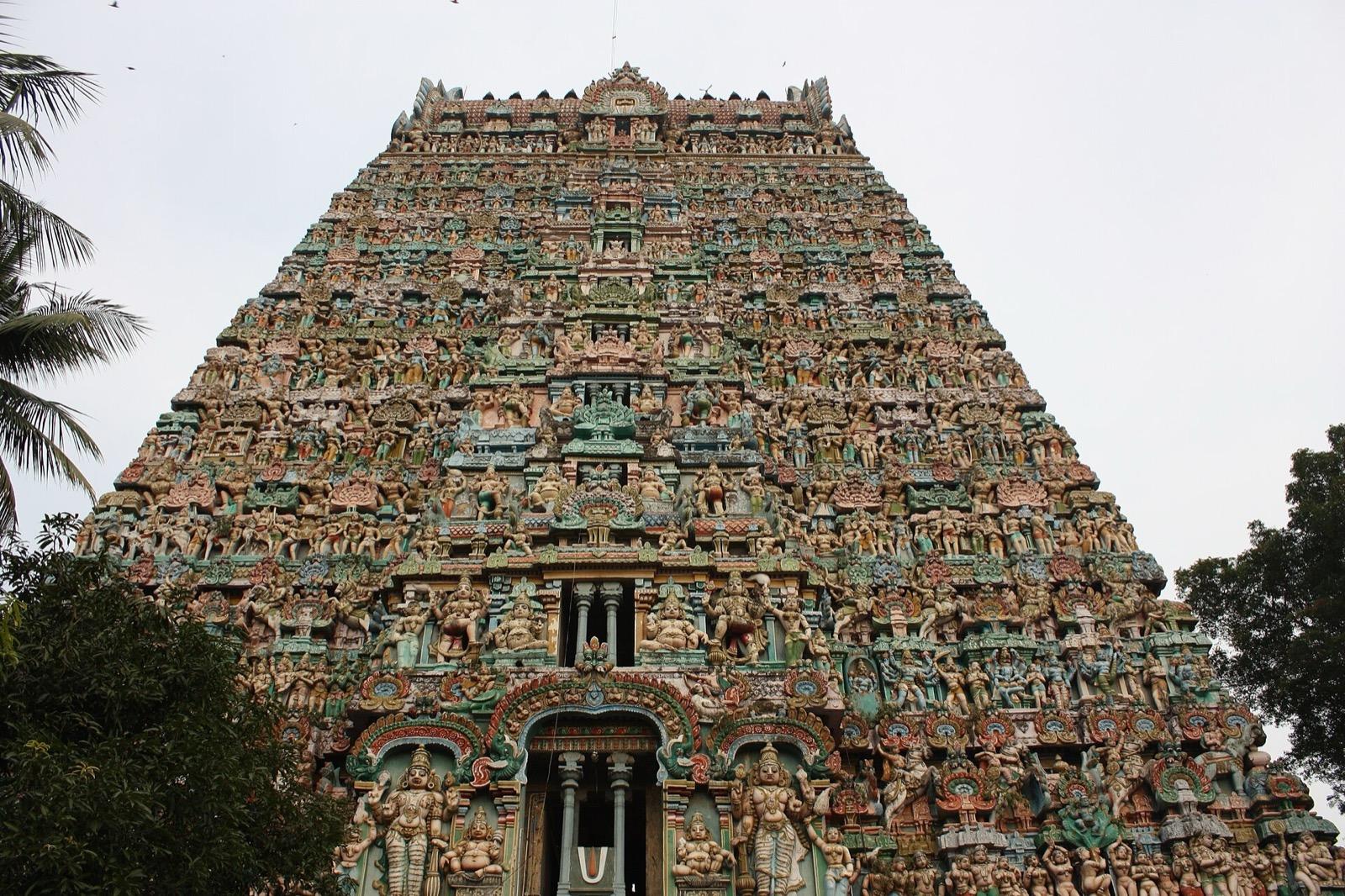
Seventeen temples belong to the festival: twelve dedicated to Shiva and five to Vishnu, almost all of them within Kumbakonam itself. On the festival day their deities are carried to the Mahamaham tank for the ritual immersion. This introduction to the Mahamaham temples tells you what each one is known for, so you can decide where to begin. Every temple has its own page on this site with more detail and sources.
How the 17 temples are connected
The Mahamaham festival is held at the Mahamaham tank about once every 12 years; the next one is expected in March 2028 (dates to be confirmed by TN HR&CE). On the day, the deities of these temples are brought to the banks at noon for the ritual immersion, called theerthavari. Pilgrims bathe in the tank, give to charity and follow the temple chariots through the streets.
The festival grows out of a yearly one. Masi Magam is held every year in the Tamil month of Masi (February–March), when the full moon is in the star Magha; the great Mahamaham comes when this alignment coincides with Jupiter in Leo. Masi Magam is still the most important yearly festival at several of these temples, so you can see them in festival dress outside the 12-year cycle too.
Of the twelve Shiva temples, ten stand within Kumbakonam town and two on its outskirts. See all the temples on one page, and the upcoming temple festivals with their calculated dates.
The 12 Shiva temples
Around the tank
Three Shiva temples stand right by the Mahamaham tank, and their stories are bound up with it.
- Kasi Viswanathar. According to tradition, the nine sacred rivers of India were told to bathe in the Mahamaham tank to be cleansed, and Viswanathar of Kashi appeared here. The temple is often called the Nava Kanniyar temple, after its images of the nine river goddesses worshipping Shiva. The present structure dates from the Nayak period in the 16th century.
- Abimukeswarar. On the eastern bank. According to tradition, Shiva turned to face the river goddesses when they came to the tank, which gives the temple its name. In its Navagraha shrine, the image of Shani (Saturn) is taller than those of the other eight planets.
- Gowthameswarar. According to tradition, the thread tied around the pot of the Kumbakonam legend fell here and became the lingam, and the sage Gautama worshipped Shiva here. An image of the sage stands in the corridor around the sanctum.
In the town
- Adi Kumbeswarar. Kumbakonam's largest Shiva temple, at the centre of the town. The town takes its name from its legend: according to tradition, Brahma's pot (kumbha) came to rest here after a great flood, and its nectar fell into the Mahamaham tank. Look for the Navaratri Mandapam, where the 27 stars and 12 signs of the zodiac are carved into a single block of stone.
- Nageswaraswamy. One of the earliest Chola temples, from the 9th century, known for its almost life-size sculpture on the walls of the sanctum. The building is aligned so that sunlight falls on the sanctum only in the Tamil month of Chithirai (April–May).
- Someswarar. Beside Sarangapani Temple, named after Soma, the Moon god, who by tradition worshipped Shiva here. It is praised in the 7th-century Tevaram hymns.
- Banapuriswarar. According to tradition, this is where Shiva took aim with his bow and arrow at the pot of nectar, which broke and spilled into the Mahamaham tank.
- Ekambareswarar. Shiva is worshipped here as Ekambareswarar with Parvati as Kamatchiamman, and the temple has a separate shrine to Kali Amman.
- Kalahasteeswarar. It shares its name with the Shiva temple at Srikalahasti in Andhra Pradesh and was renovated by Serfoji of Thanjavur.
- Kambatta Visvanathar. South-west of Adi Kumbeswarar. Under the Cholas there was a mint here; a mint is called kambattam in Tamil, and the name stayed with the temple.
On the outskirts
- Koteeswarar, Kottaiyur. In a village on the western outskirts, on the road to Swamimalai. According to tradition, Shiva appeared here in ten million (kodi) forms.
- Amirthakalasanathar, Sakkottai. A 9th-century Chola temple praised in the Tevaram hymns. According to tradition, the essence of creation arrived here in a pot during the great flood. The temple has a moat both inside and outside its walls.
The 5 Vishnu temples
- Sarangapani. Kumbakonam's largest Vishnu temple and one of the 108 Divya Desams. Its eleven-tier gateway tower is the tallest in the town, and its central shrine is built as a chariot drawn by horses and elephants. It stands beside the Potramarai tank.
- Chakrapani. Vishnu is worshipped here in the form of his discus. The image in the sanctum has eight arms and, unusually, a third eye. Masi Magam is celebrated here with a chariot procession.
- Ramaswamy. A Thanjavur Nayak temple to Rama. Its entrance hall has sixty-four pillars, each carved from a single stone, and the whole Ramayana is painted around its first courtyard in three bands.
- Rajagopalaswamy. North of Big Street. Garudasevai, when the deity is carried in procession on Garuda, is one of its main festivals.
- Varahaperumal. Dedicated to Varaha, the boar incarnation of Vishnu, with Bhoomidevi, the earth goddess.
If you have only a few hours
You don't need to see all seventeen on one visit. Choose by what interests you, and check the order on a map before you set out.
- For the legend of the pot: Adi Kumbeswarar, Banapuriswarar and the three temples around the tank (Kasi Viswanathar, Abimukeswarar and Gowthameswarar).
- For art and architecture: Nageswaraswamy for early Chola sculpture, Ramaswamy for the painted Ramayana, Adi Kumbeswarar for the zodiac stone and Sarangapani for the tallest gateway tower.
On the festival day itself the deities are carried in procession to the tank, so a quiet temple visit is easier on another day.
Visiting respectfully
These are working temples, administered by the Tamil Nadu HR&CE Department. Opening hours, dress expectations, photography rules and footwear arrangements are set by each temple and can change during the festival. Check the notice at each temple's entrance, and follow the directions of temple staff.

About the author
Mahamaham 2028 · Kumbakonam
The team behind this independent guide to Mahamaham 2028. Every fact here comes from the sourced pages on this site.
Share this guide
Sources
- Mahamaham (Wikipedia)
- Hindu temples in Kumbakonam (Wikipedia)
- Adi Kumbeswarar Temple, Kumbakonam (Wikipedia)
- Kasi Viswanathar Temple, Kumbakonam (Wikipedia)
- Abimukeswarar Temple (Wikipedia)
- Gauthameswarar Temple (Wikipedia)
- Nageswaraswamy Temple (Wikipedia)
- Someswarar Temple (Wikipedia)
- Banapuriswarar Temple (Wikipedia)
- Kambatta Viswanathar Temple (Wikipedia)
- Kalahasteeswarar Temple (Wikipedia)
- Kodeeswarar Temple (Wikipedia)
- Amirthakadeswarar Temple (Wikipedia)
- Sarangapani Temple (Wikipedia)
- Chakrapani Temple (Wikipedia)
- Ramaswamy Temple, Kumbakonam (Wikipedia)
- Rajagopalaswamy Temple, Kumbakonam (Wikipedia)
- Varahaperumal Temple (Wikipedia)
Related pages on this site
Related guides
Temples & culture
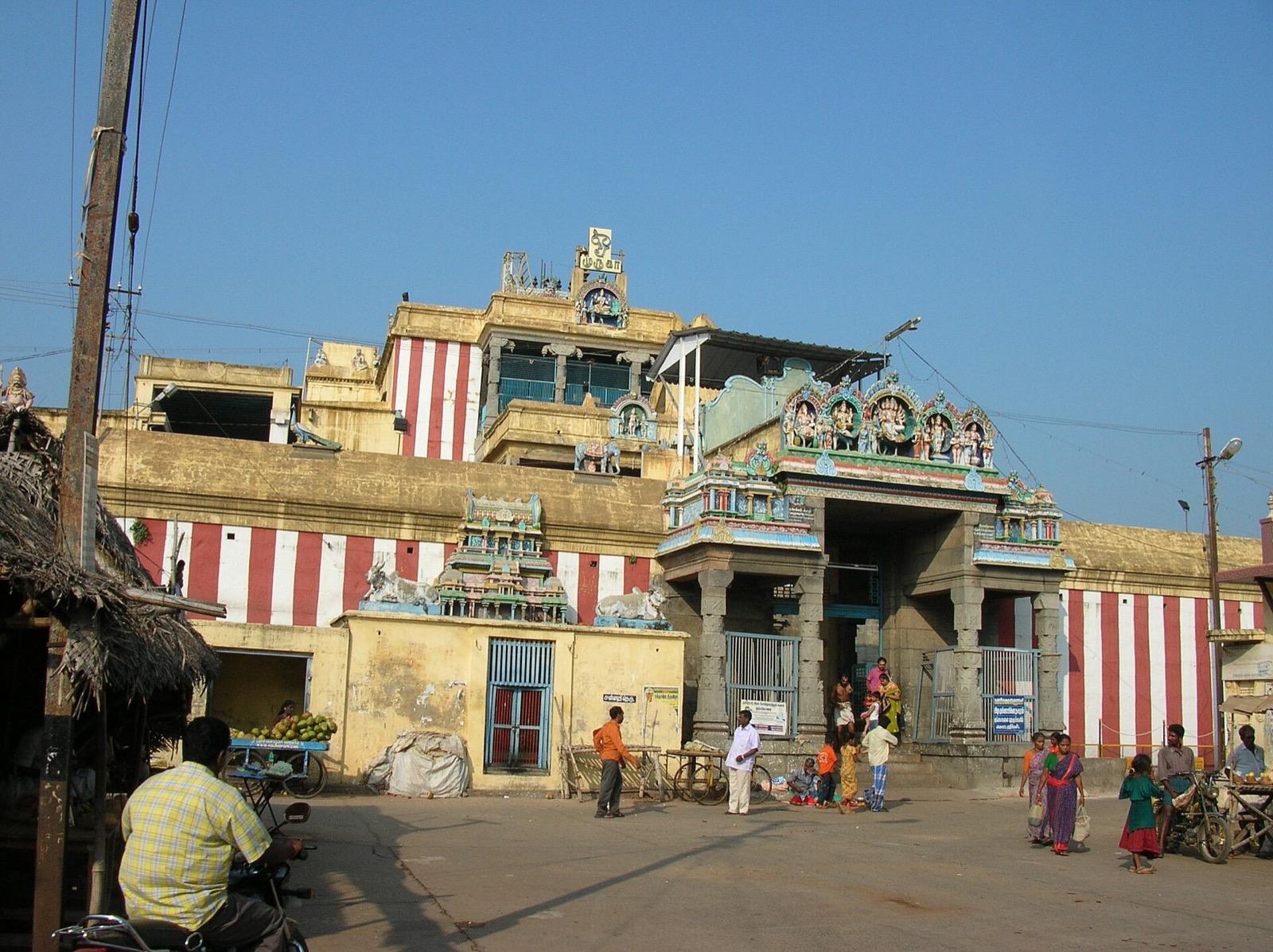
Kumbakonam beyond temples: degree coffee, bronze casting and silk
Kumbakonam degree coffee, Swamimalai bronze casting and Thirubuvanam silk: the crafts and tastes of the temple town, and what to look out for.
· 3 min read
Temples & culture
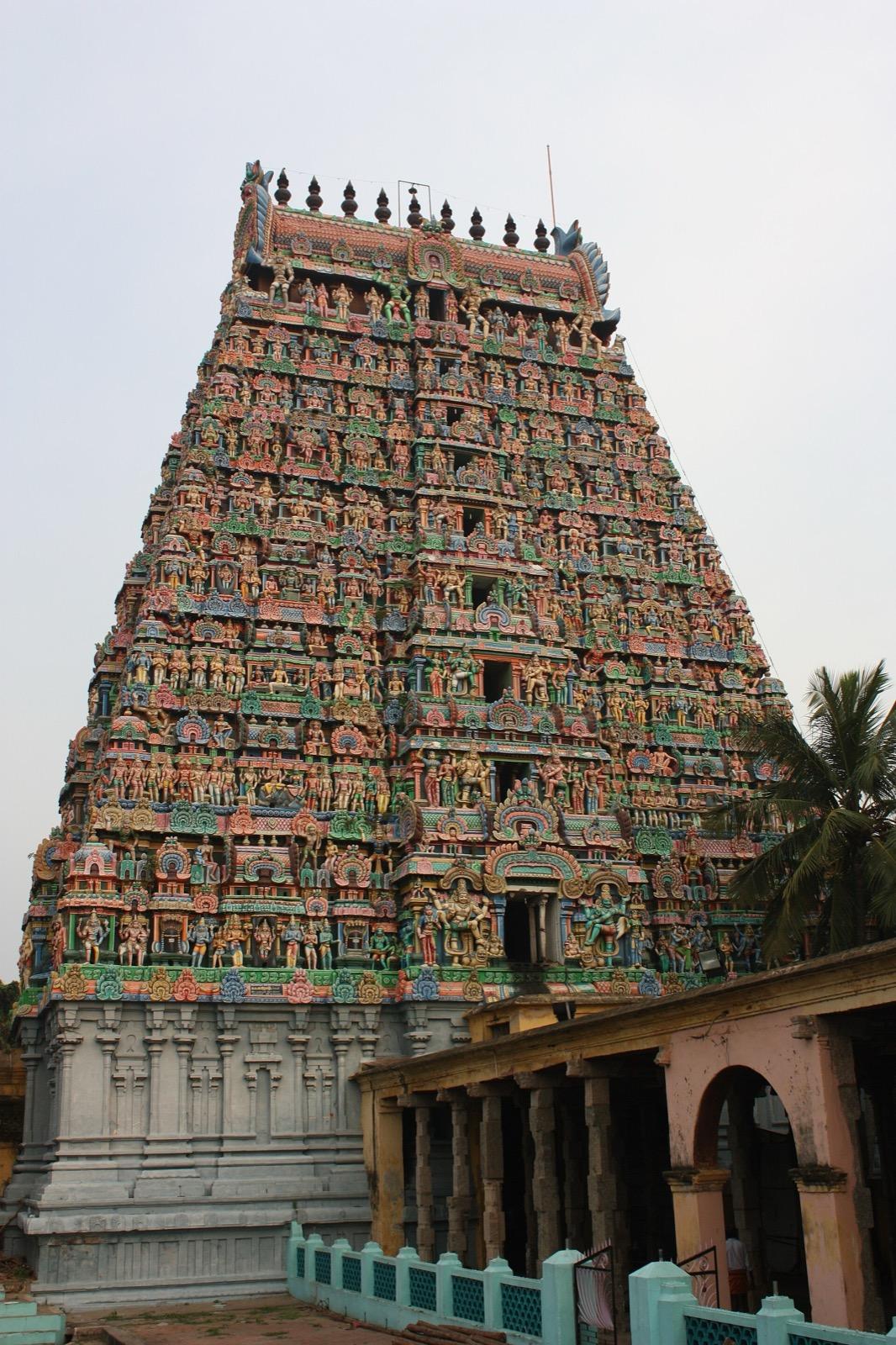
The legend of Mahamaham: the pot of amrita and Kumbakonam's name
According to tradition, Brahma's pot came to rest at Kumbakonam after a great flood and its nectar filled the tank: the legend behind Mahamaham.
· 4 min read
Itineraries
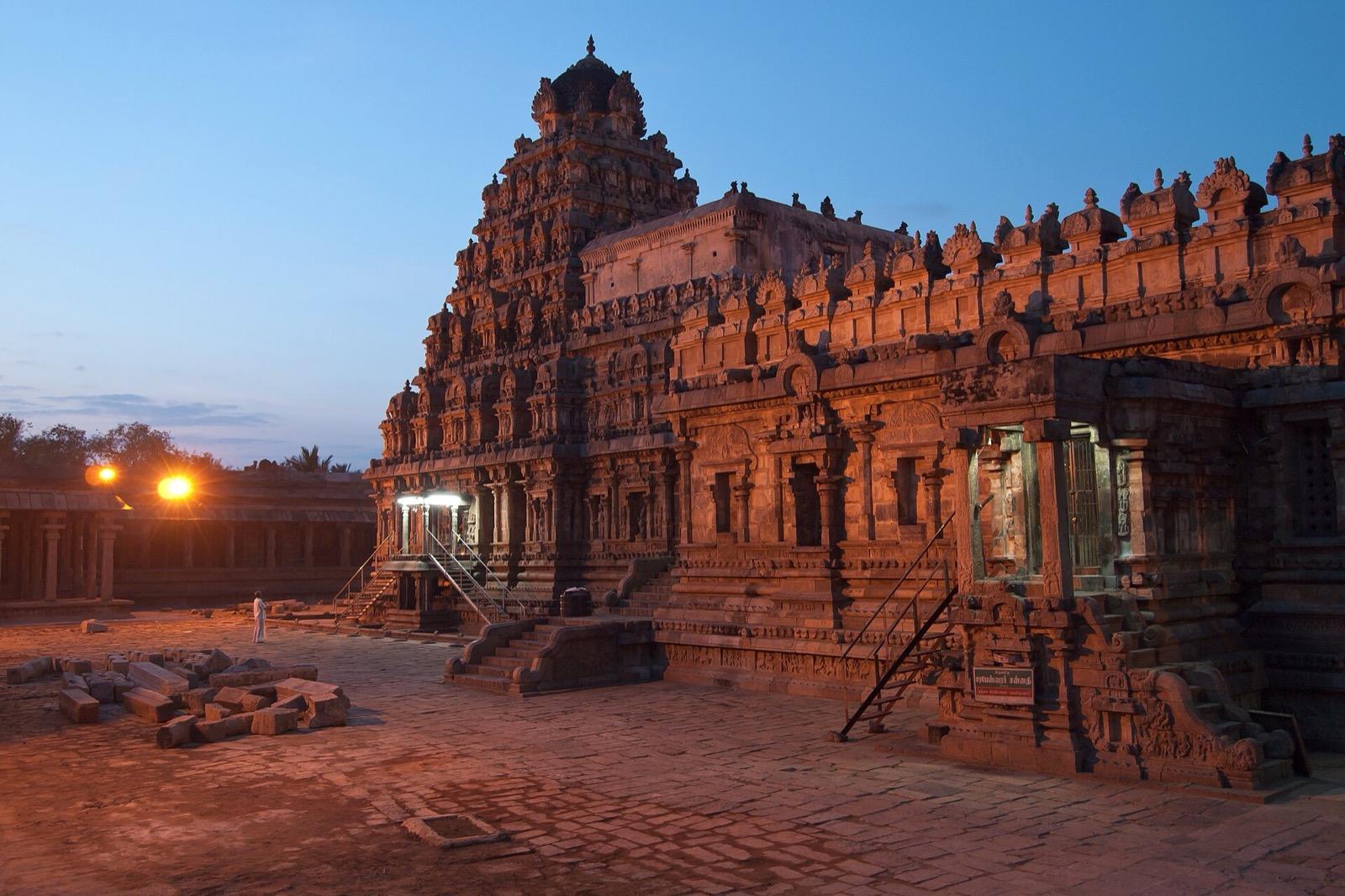
A 2-day Kumbakonam itinerary for pilgrims
Two days in Kumbakonam: the Mahamaham tank and the town's great temples on day one, Darasuram, Swamimalai and nearby temples on day two.
· 3 min read